
For this month, October 2019, the theme challenge is “Reflections”.
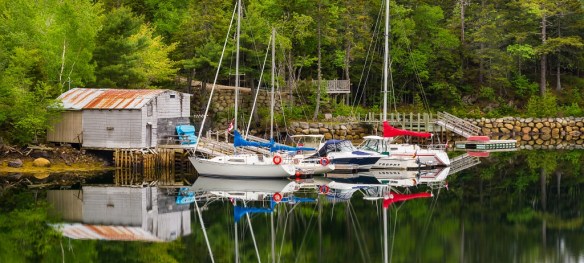
In coastal Nova Scotia we have many opportunities to photograph subjects near the water and with calm weather conditions it’s a great time to get out and capture some reflections.
There are many different types of subjects to photograph and so many different reflective surfaces. The reflection can come from not only calm water but from glass buildings or surfaces, a mirror(s), any reflective surface such as the surface of a car, or even a water puddle.
The angle where you place your camera is important the lower and closer you get to the reflective surface the more exaggerated and grander the reflection.
Stability of your camera is important for any type of photography and reflection photography is no different. Using a tripod or using your hands or body against a fixed object or surface can help with stability.
For camera settings you can start in Aperture Priority mode (Av for Canon or A for Nikon) with a smaller aperture (lower f-stop number) say f/8 with as low ISO of 100. Keep an eye on what the camera chooses for a shutter speed especially if you are taking your images handheld. If the shutter speed is slow say 1/50 then raise your ISO to obtain a faster shutter speed of at least 1/100. For these types of images, landscapes, you would use a wider angle lens as an example somewhere around 18 to 30 mm.
Students are encouraged to develop their ability to tell a story or invoke an emotion, as well as how to plan and troubleshoot while creating their images. As such it’s important to not only create the image but to also include a “title”, and write a short paragraph about; how they came up with the idea, any interesting back ground that compelled them to make the image, and describe any techniques on how they overcame any obstacles.
As always with our monthly theme challenges we try to seek out an instructional resource, below is a YouTube video link to give you some hints and ideas.
Reflection Photography instructional aid (although this video uses an iphone, all of the concepts are applicable to all cameras):
Secrets For Taking Incredible iPhone Reflection Photos: by iPhone Photography School
Link: Secrets For Taking Incredible iPhone Reflection Photos (18min 4sec)
Some additional Reflection Photography instructional aids: by Visual Art Photography Tutorials
■ Water Reflections Photography Tips and Tricks – Super Ideas For High Impact! (7min 56sec)
■ Creative Photography Tutorial – Abstract Photography With Window Reflections (9min 3sec)
An important part of improving your photography is practice, which is one aspect of the monthly theme challenge, in addition you have an opportunity to learn about different genres, techniques and tips.

 © You Can Learn Photography