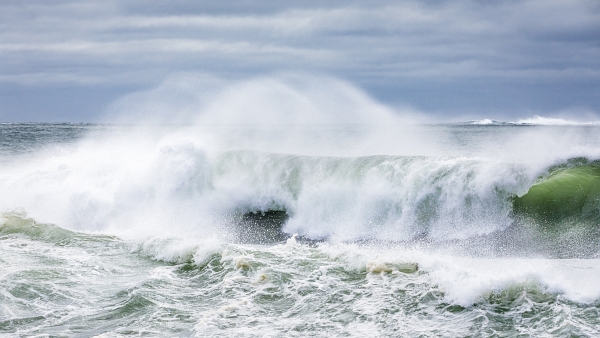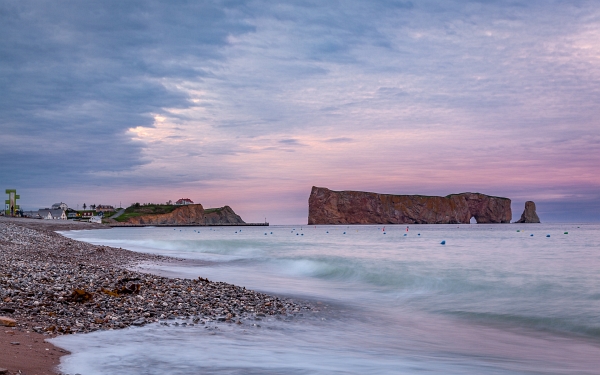
December Theme Challenge – “Lines”

This challenge is quite late due to many things but just mainly having the time available within my busy schedule to get it written and posted, for that I apologize. As a result I suggest you take the month of January to complete this challenge. There will also be a January challenge but I will wait until the end of the first week of January before I post it.

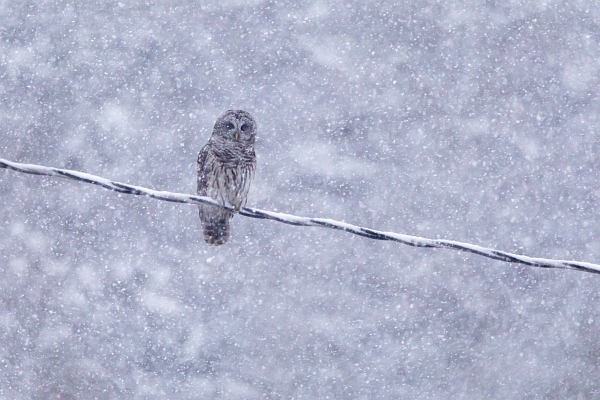
For the December challenge I encourage you to create an image using leading lines to take the viewer to your subject in your image. This is a very helpful composition guideline and with some practice it can really improve your images. Take a bit more time to view your surroundings before you start trying compositions, while thinking about possible leading lines.

First try some leading lines with a landscape image, but be sure to choose your composition to include a leading line to lead the viewer to your subject.

f/16, 1.3 sec, ISO 100, @31mm

Let’s first start with a waterfall image, which was your November challenge, and see if you took any images that have leading lines. I bet you will find the water and the rocks in font of your water fall images reveal natural leading lines. Using this as a starting point you can now start to see and visualize where to start with your composition to make the final image stronger. Remember that depth of field is important to make sure your image is sharp from the foreground element through to the waterfall.

In the following image of the rocks on the beach I waited for the leading lines to appear using a slow shutter speed while choosing the decisive moment to push the shutter when the water came up past the rocks and then began to recede back to the ocean.

These images can be created using a shutter speed between 0.5 seconds to 2 seconds depending on the amount of water. Always remember to be careful in situations where there is potential undertow which can be dangerous not only for you but for your camera as well. In this case I was well up on the beach so there was not a lot of water, wearing rubber boots, and I had pushed my tripod legs into the sand a bit to make sure my tripod would not fall over or move from the movement of the receding water.

f/14, 0.3 sec, ISO 50, @24mm

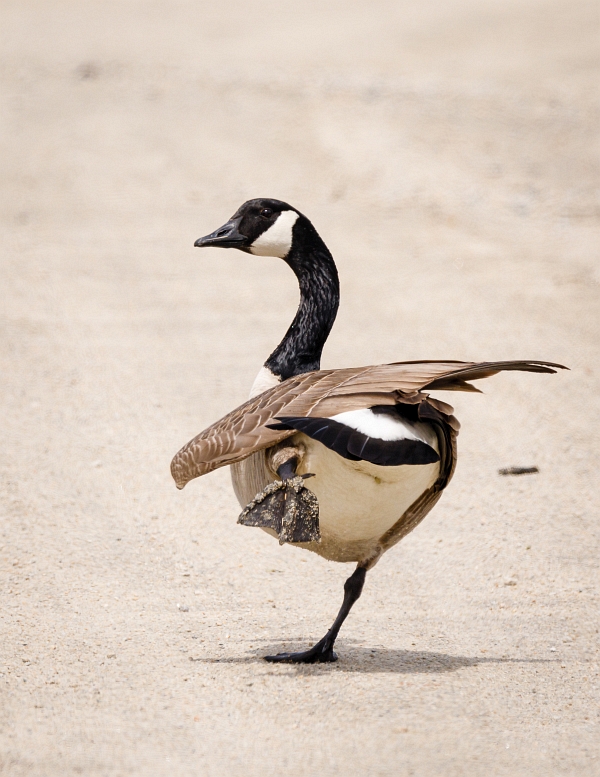
You never know when there might be an opportunity for creating an image, such as the ducks crossing the road in the image below. As you begin to take images in a fleeting moment be sure to also take in your surroundings and if possible move to get yourself in a position for your best composition and make use of any leading lines. Then push the shutter at the right moment to capture that special image.

f/8, 1/1000, ISO 640, @345mm

With the image of Peggy’s Cove Lighthouse at sunset shown below, make use of natural occurring reflections combined with man made objects to serve as leading lines to enhance your image. With reflections it depends on the perspective, remember to move up, down, left, or right to get the refection the way you want it. Then set up your camera on your tripod to the exact position, but then wait for the sun to just start intersecting with the rocks before pushing the shutter. Choosing a small aperture to cause the star burst around the sun adds just that final element to your image, of course a beautiful sky really adds to the image as well.

f/16, 1/8, ISO 100, @24mm

Sometimes the subject of your image is not quite obvious, but is more of a concept or feeling you are trying to get the viewer to experience. In the image below of a walkway leading into a forest, it is hoped that it makes the viewer wonder what is there and that they would like to visit that place themselves, which is created by the leading line of the wooden walkway going off into the forest.

f/16, 1/5, ISO 200, @24mm

I hope that you can now see how leading lines can help make your images more impactful and how they can engage the viewer with your image, hopefully this will hold the viewers attention for a period of time longer than they normally would spend looking at an image.

Students are encouraged to develop their ability to tell a story or invoke an emotion, as well as how to plan and troubleshoot while creating their images. As such it’s important to not only create the image but to also include a “title”, and write a short paragraph about; how they came up with the idea, any interesting back ground that compelled them to make the image, and describe any techniques on how they overcame any obstacles.

As always with our monthly theme challenges we try to seek out an instructional resource, below are some YouTube video links to help with some important tips, hints and ideas.
Leading Lines in Photography instructional aids:
Using Leading Lines in Photography: by Julieanne Kost (17min 52sec)
How To Compose Your Photos With Leading Lines: by iPhone Photography School (8min 5sec)

An important part of improving your photography is practice, which is one aspect of the monthly theme challenge, in addition you have an opportunity to learn about different genres, techniques and tips.

November Theme Challenge – “Waterfalls”

This month I encourage you to create an image using slower shutter speeds to show motion in water. Now that we are getting some rain the streams and rivers are starting to show signs of water again, so it’s a great time to get out and try taking waterfall images. Spend the time creating a good composition, you will be rewarded with not only great images but a nice relaxing adventure listening to the water.

Choosing the right weather conditions is important when to go out shooting waterfalls, overcast conditions or early morning as well as late in the day when there is dappled light works very well. Even on damp days just before it starts to rain or just after, the colours appear more saturated especially in the fall adding even more to your final image.

©Trevor Awalt_IMG_4161_small

f/16, 1.6sec, ISO 100, @24mm

Shutter speed is typically chosen in relation to the amount of water that is flowing. If there is a lot of water the shutter speed does not have to be as slow. With less water the shutter speed needs to be a bit slower to show the motion. Some like the slow shutter speed effect because it gives the viewer a calming feeling. In the images below you can see the water appears smooth but still shows detail, this adds the dimension of motion to the image. Remember you want the water to appear white but not over exposed, so watch your histogram and highlight alert.

©Trevor Awalt_48A9360-Edit_small

f/11, 1.3 sec, ISO 100, @24mm

The use of a circular polarizer filter will help take the sheen off the water as well as the shine off the rocks, and also prove a bit more color saturation. Think about your shutter speed to create the look you are going for, if you use too long of a shutter speed your water may no longer show any detail and just be complete white mist. The more water which would typically cause the water to move faster you would not use too slow of a shutter speed. Using a circular polarizer also reduces the light by 1 to 1 1/2 stops of light helping to get a slower shutter speed.

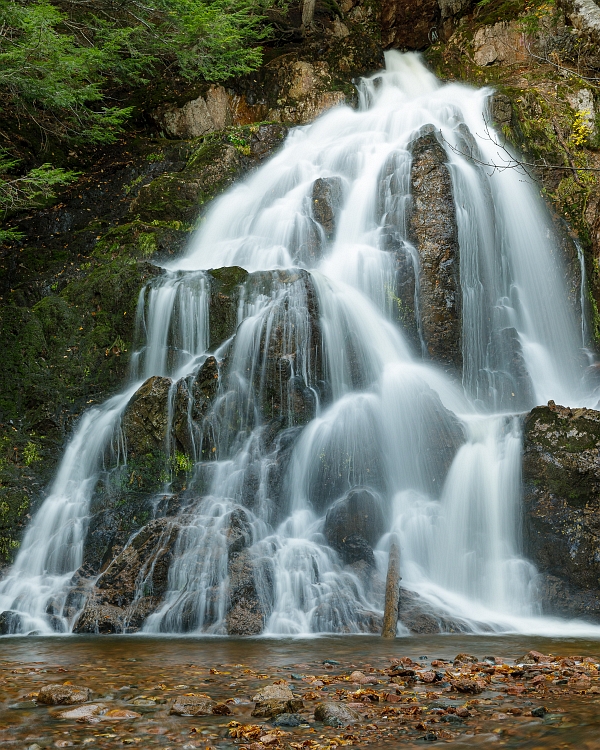
Don’t limit yourself to one composition or wide angle lens, use a longer focal length (zoom lens) and even vertical compositions to isolate the scene to reach places you are not able to physically get closer to. Spend time working the location, these simple techniques will help you create a different image such as the one shown below.

©Trevor Awalt_48A8100_small

f/11, 0.6 sec, ISO 50, @110mm

When using slower shutter speeds, you will need to stabilize your camera typically using a tripod, gorilla pod, or platypod. Even setting your camera on a solid surface works if it provides an acceptable composition. In any case use caution at waterfall locations, wear good rubber boots so you don’t slip and fall on the wet rocks especially with wet leaves in the fall.

As far as camera settings go start with your lowest ISO, typically 100, set your Aperture somewhere between f/8 – f/16 to obtain a shutter somewhere between 1/4 sec to 2 sec. Your ideal shutter speed is dictated by how much water and how fast the water is moving. Check your images to make sure your images have the right balance between silky smooth and detail.

Your focus point is determined by the depth of field required to ideally have a sharp image from front to back. In general if you are using a wide angle lens the hyperfocal distance should be close to 1/3 into the scene. Please refer to my blog posts on focusing Depth of Field and hyperfocal distance. If you are using a longer focal length, focus on the main subject and take into consideration the depth of field when choosing your aperture, focal length and how close you are to the subject.

If possible clean up any debris that would distract from the image. However, sometimes this is not possible as seen in the image below. The small branch that was on the rock to the upper left I was not able to reach to remove it.

©Trevor Awalt_IMG_4398_small

f/16, 1/8 sec, ISO 100, @24mm

Students are encouraged to develop their ability to tell a story or invoke an emotion, as well as how to plan and troubleshoot while creating their images. As such it’s important to not only create the image but to also include a “title”, and write a short paragraph about; how they came up with the idea, any interesting back ground that compelled them to make the image, and describe any techniques on how they overcame any obstacles.

As always with our monthly theme challenges we try to seek out an instructional resource, below are some YouTube video links to help with some important tips, hints and ideas.
Waterfall Photography instructional aids:
Photographing waterfalls with landscape photographer Sarah Howard of Image Seen: by Sarah Howard (10min 28sec)
How to Photograph Waterfalls – Landscape Photography Waterfall Tutorial: by David Johnston (15min 3sec)

An important part of improving your photography is practice, which is one aspect of the monthly theme challenge, in addition you have an opportunity to learn about different genres, techniques and tips.