For this month, July 2024, it’s an information packed dual theme challenge; “Fireworks“ and “Street Photography“. We’re publishing this post more than a week early so you have a chance to review the information and to prepare/practice for your Fireworks challenge for example; Canada Day July 1st or Independence Day July 4th in the United States where there is a chance to experience fireworks in your area.
Please leave a comment to let us know your Country and when the national holiday takes place so we can appreciate your celebration and receive some education at the same time (thank you for sharing in advance).
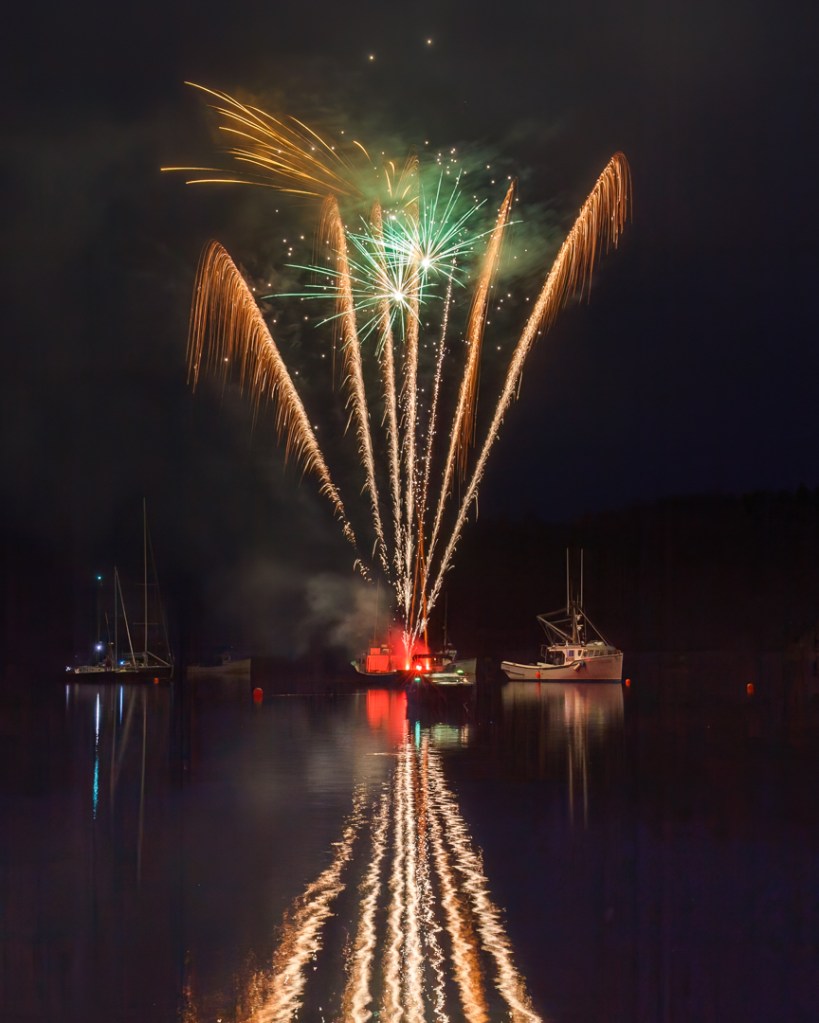
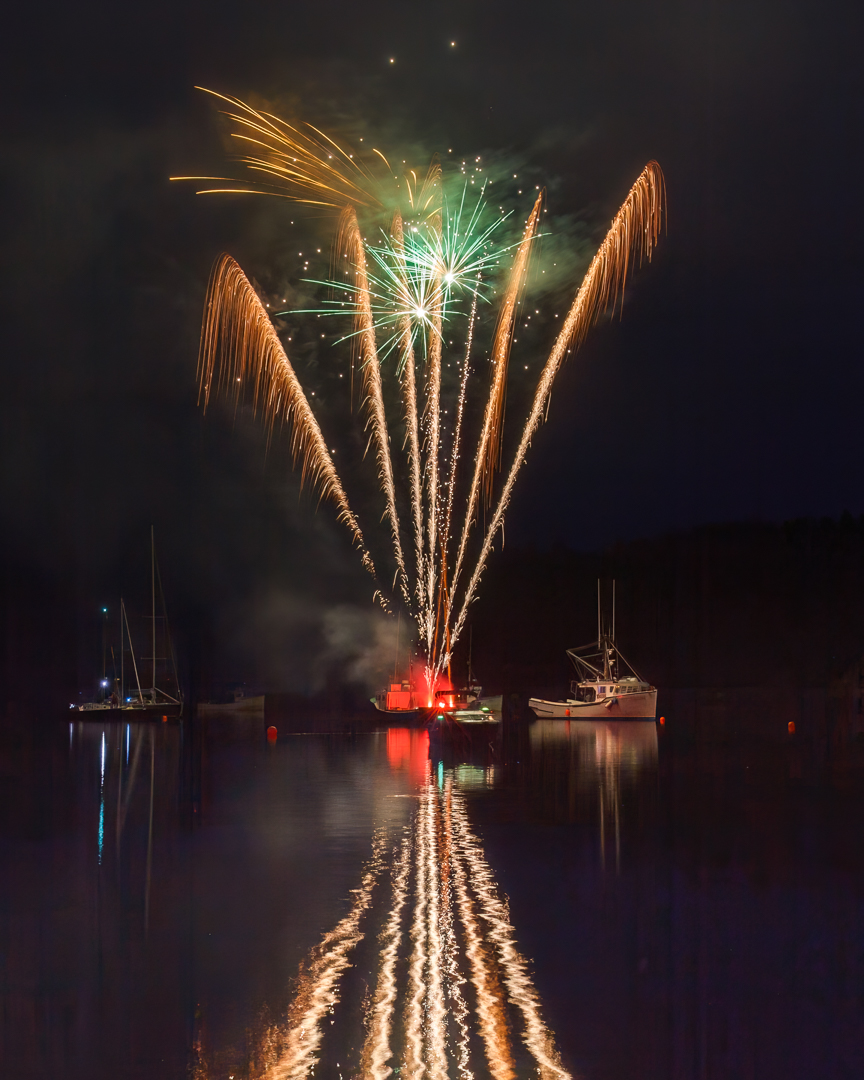
With typically only one evening during July to get a chance to shoot “Fireworks”, we thought it would make sense to have an alternative challenge, see the separate “Street Photography” blog post, to give you more opportunity to capture an image this month. Note you can choose to present your images in either Colour or Monochrome. The above fireworks image shown was taken, with a Canon 5DmkII, f/10, 4sec, ISO 100, @28mm, in our local area, Deep Cove on the Aspotogan Peninsula Nova Scotia which is appreciated each year made possible from local donations with local volunteers and our Fire Department running the event.
Fireworks
General Starting tips: Fireworks can be shot using various methods and techniques however I prefer to use the following approach;
- typically choose a lens with a focal length between 24mm – 100mm
- an aperture setting between f/5.6 and f/11
- a shutter speed between 2sec – 5 sec
- with an ISO setting between 100 – 200
- a wired shutter release, and a tripod
- white balance should typically be set between daylight (5200) to shade (7500) depending on your scenario, however you may need to go lower even down to Tungsten (3200) if there are street and building lights in your scene
- setup your tripod and make sure your camera is level.
- turn off image stabilization
- enable highlight alert
- know how to put your camera in Live View mode
- manual focus works best
Pre-focus where the fireworks are going to be lit, be careful not to touch your lens focus ring once you have acquired focus. Alternatively you can use auto focus once the fireworks start then switch to manual once you have acquired focus, again be careful not to touch your lens focus ring once you have established focus. Press the shutter when the fireworks starts rising, once the shutter time has elapsed check your image to make sure you’re image is as expected. Make any necessary adjustments to; Shutter Speed, ISO, Aperture as necessary, and composition then catch the next one and repeat.
Get to know your Camera is Important: Before the day of the fireworks, practice spending time with your camera so you are able to change the Shutter Speed, Aperture, ISO, and switch between playback and live view mode while working in the dark.
Additional tips to consider:
- Check with your local organizations to find out when the fireworks are scheduled in your area and how to get notified of a cancellation due to rain or foggy weather, Facebook is usually a great platform for this.
- It’s best to arrive 30 – 45 minutes minutes before dark so you can find the exact location where the fireworks will originate from and where the viewing areas are.
- You may experience keeping the area in front of you clear as people may just walk right in front of you. Just explain what you are doing and be courteous working with them to resolve the issue.
- Setup your tripod first and get it as level as possible. Then mount your camera and adjust your tripod head for your composition and horizontal level as possible. Turn off image stabilization. Consider including a foreground for sense of place if it is bright enough, an example would be water because it will include a reflection.
- You may need to keep adjusting your exposure during the event due to the amount of light the fireworks are emitting. Some bursts are not as intense as others and also your ambient light may change depending on the start time of the event. Use one of the larger bursts as a guide and just keep adjusting your Shutter Speed, ISO and Aperture slightly to find the setting that works the best for your situation.
- The idea of using 2sec – 5sec for the shutter speed is to mainly to get consistent exposure results plus include the light trails of the fireworks as they are raising from the ground (if you choose to use bulb mode try to be consistent with your duration so your result will be somewhat consistent).
- Start your shot when the light is on it’s way up and the shutter should still be open when the burst occurs at its peak (be aware of your timing). Also keep an eye on your composition so you don’t cut off the burst at the top remembering that not all bursts will occur at the same height. Adjust your focal length if necessary making small adjustments, however this can affect your focus so refocus if necessary, and keep checking your LCD.
- Although it may be difficult as everything is happening quickly, but try to enjoy the event as well. Don’t get too wrapped up in what you are doing or get overwhelmed, take a deep breath, relax a bit, and enjoy the experience.
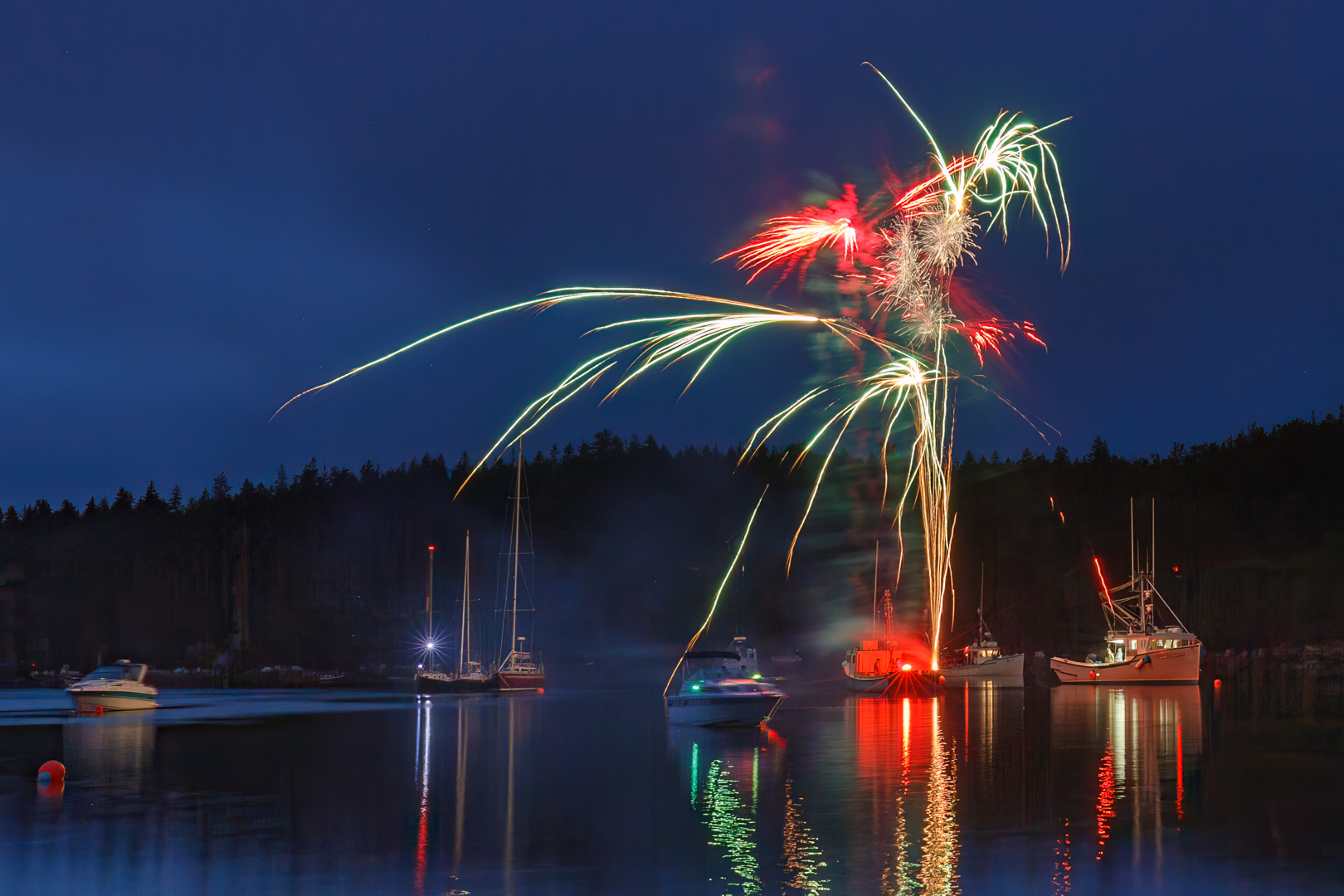
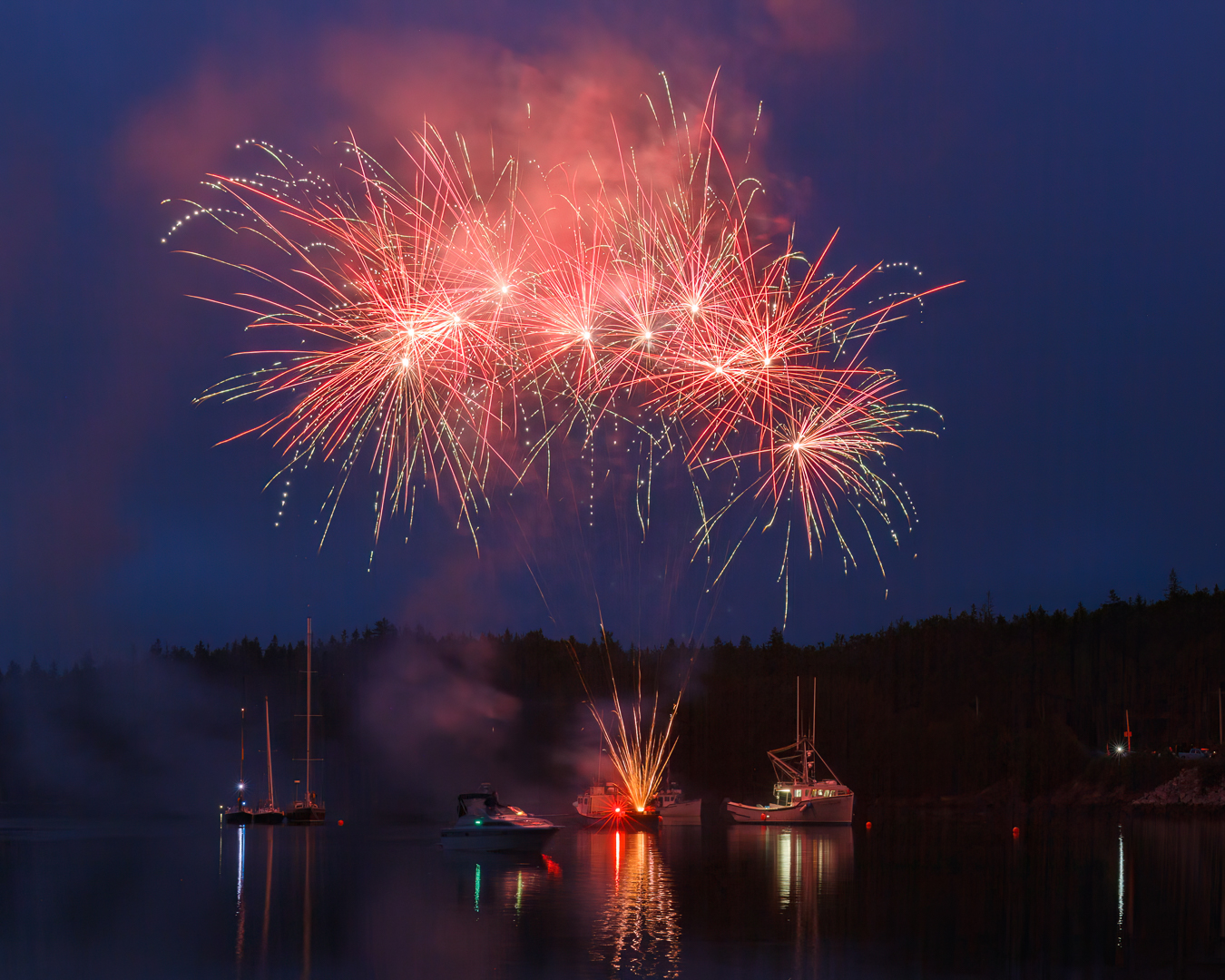
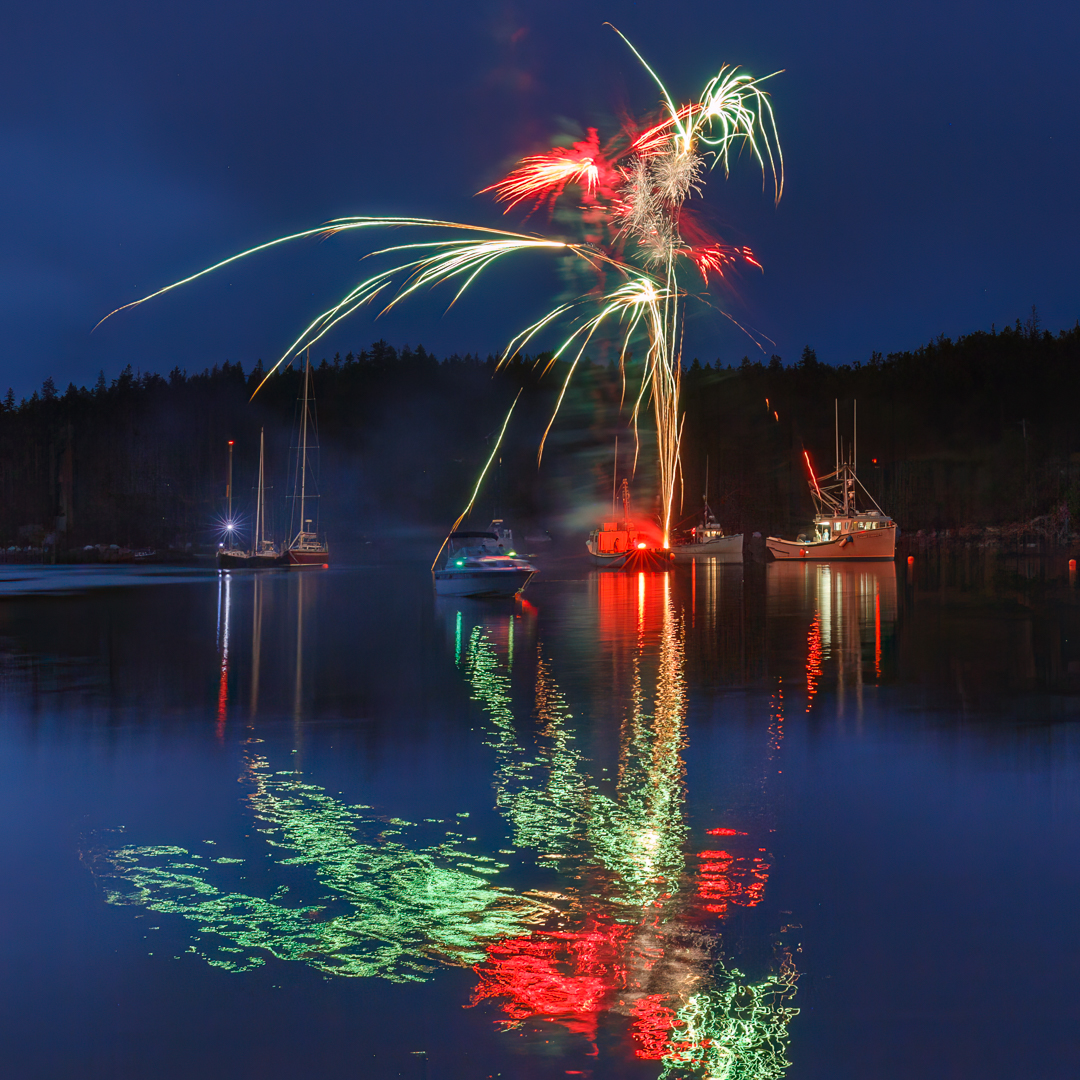
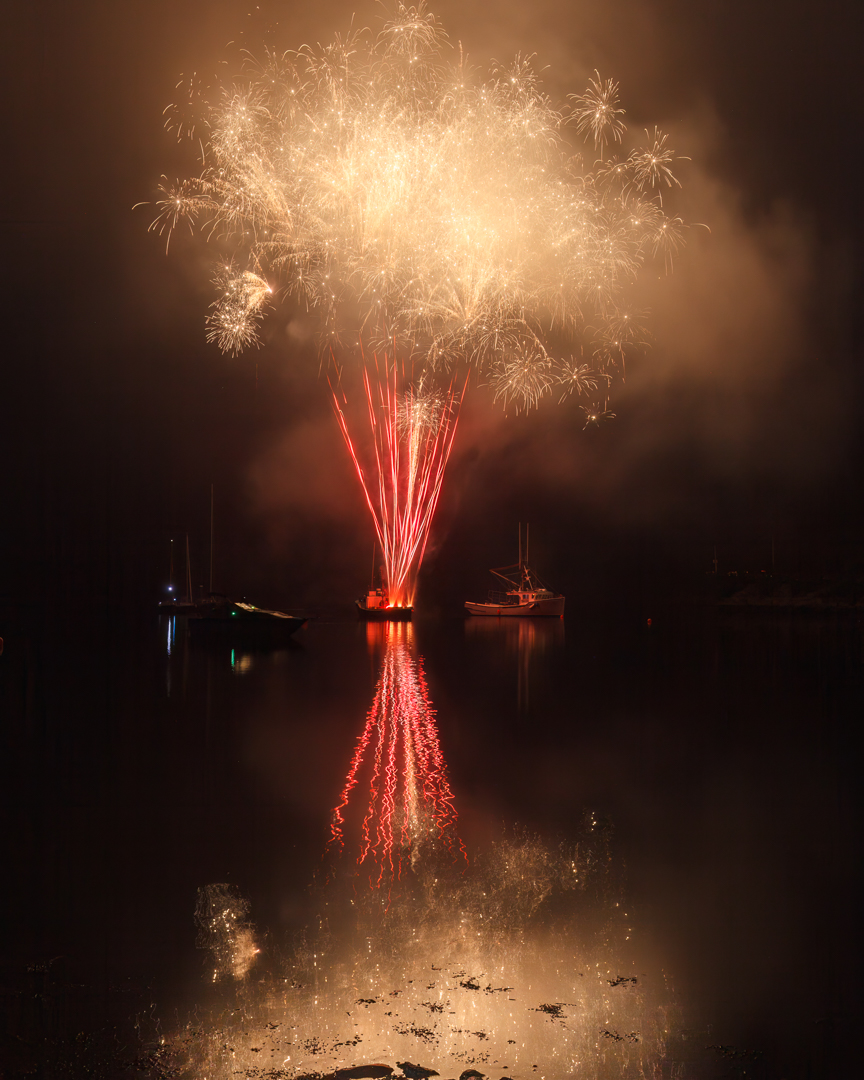
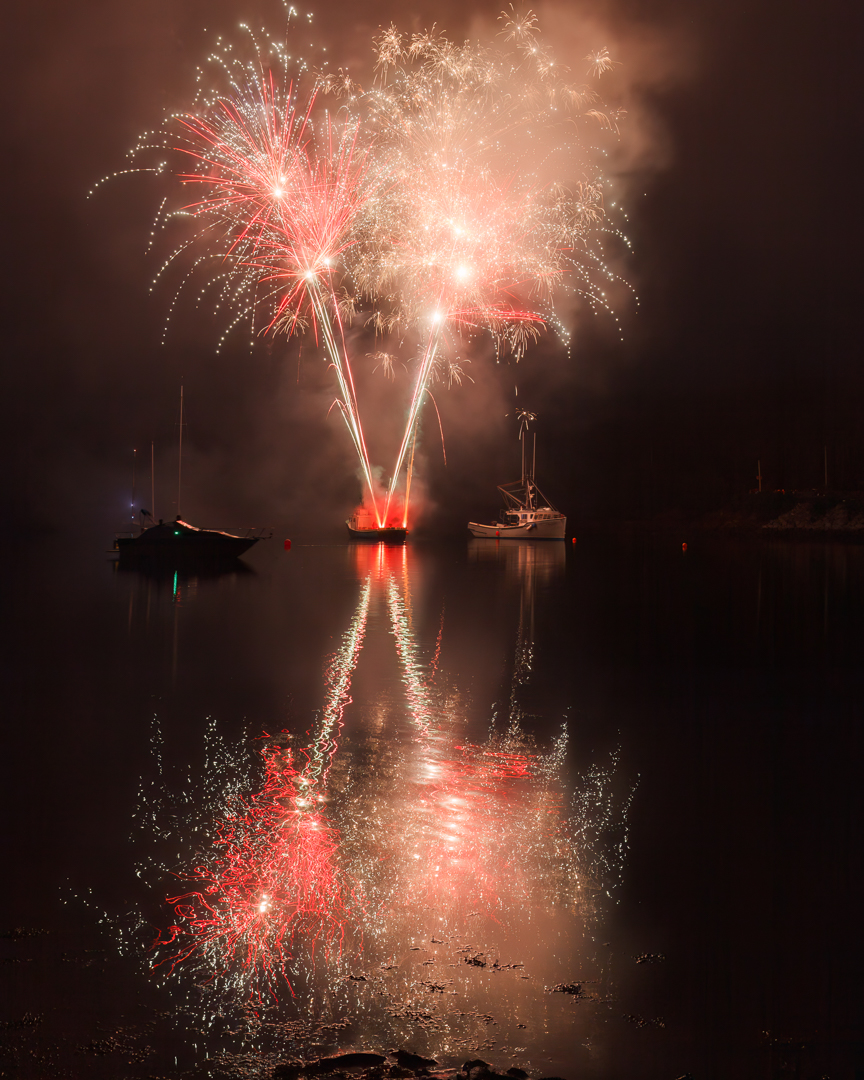
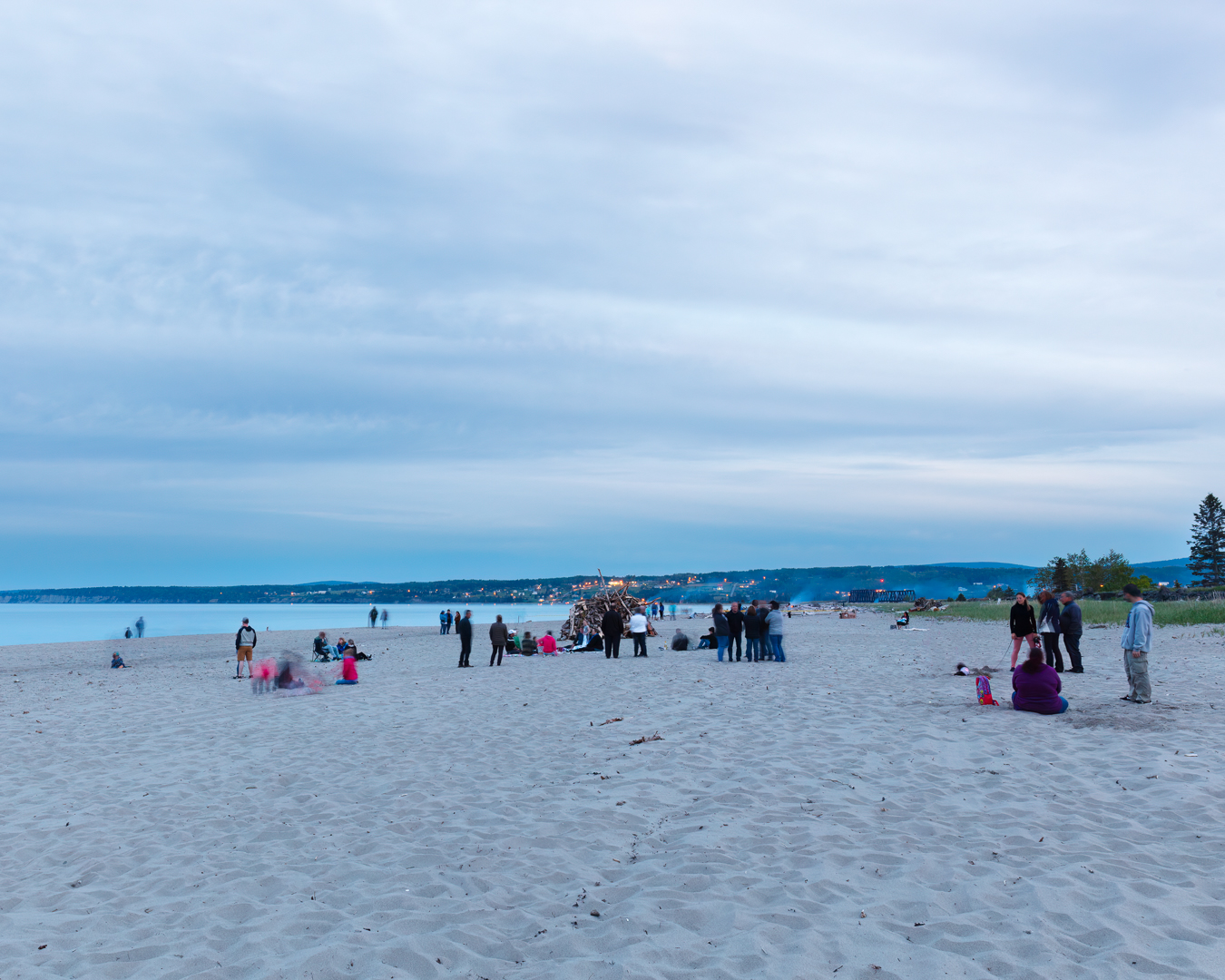
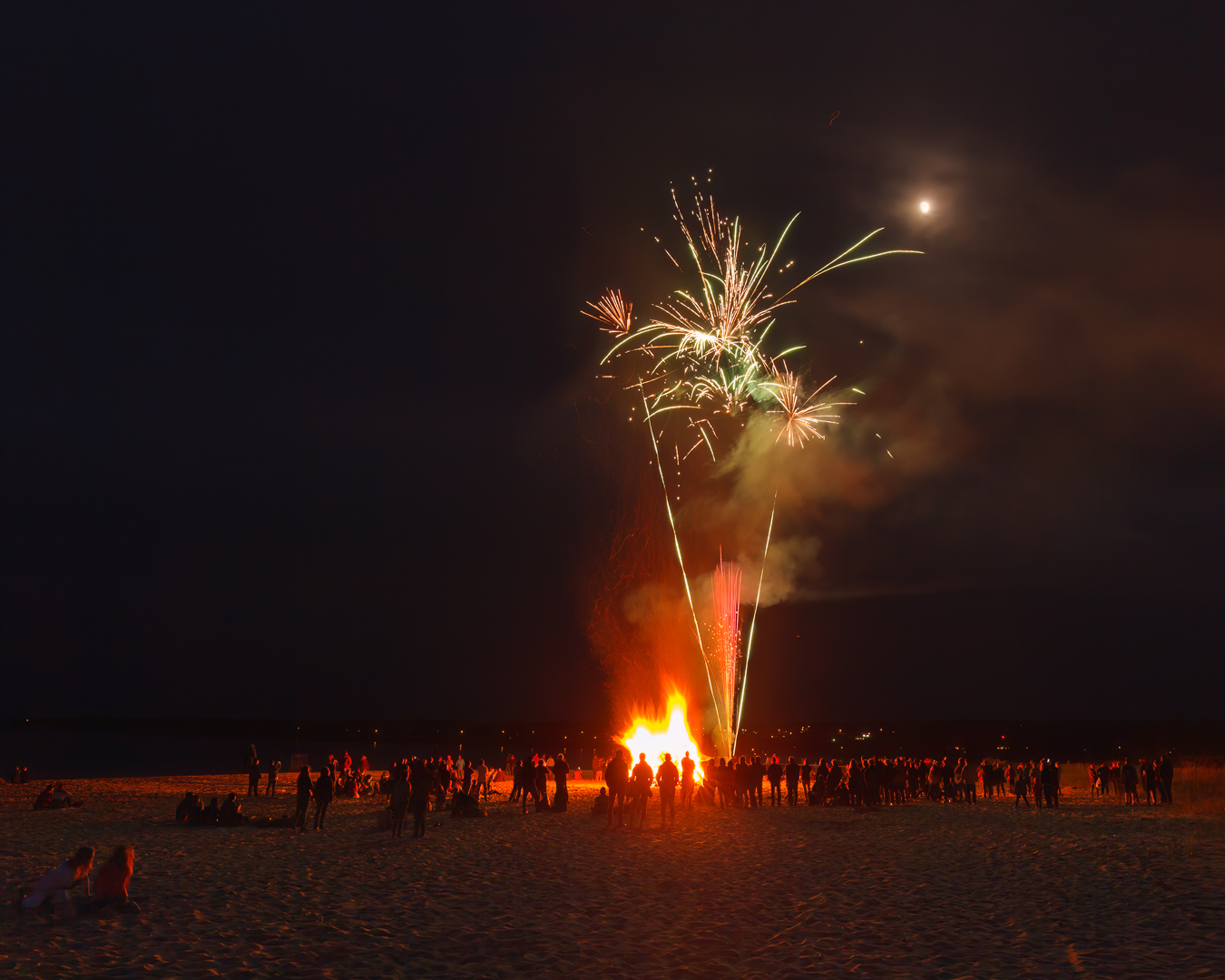
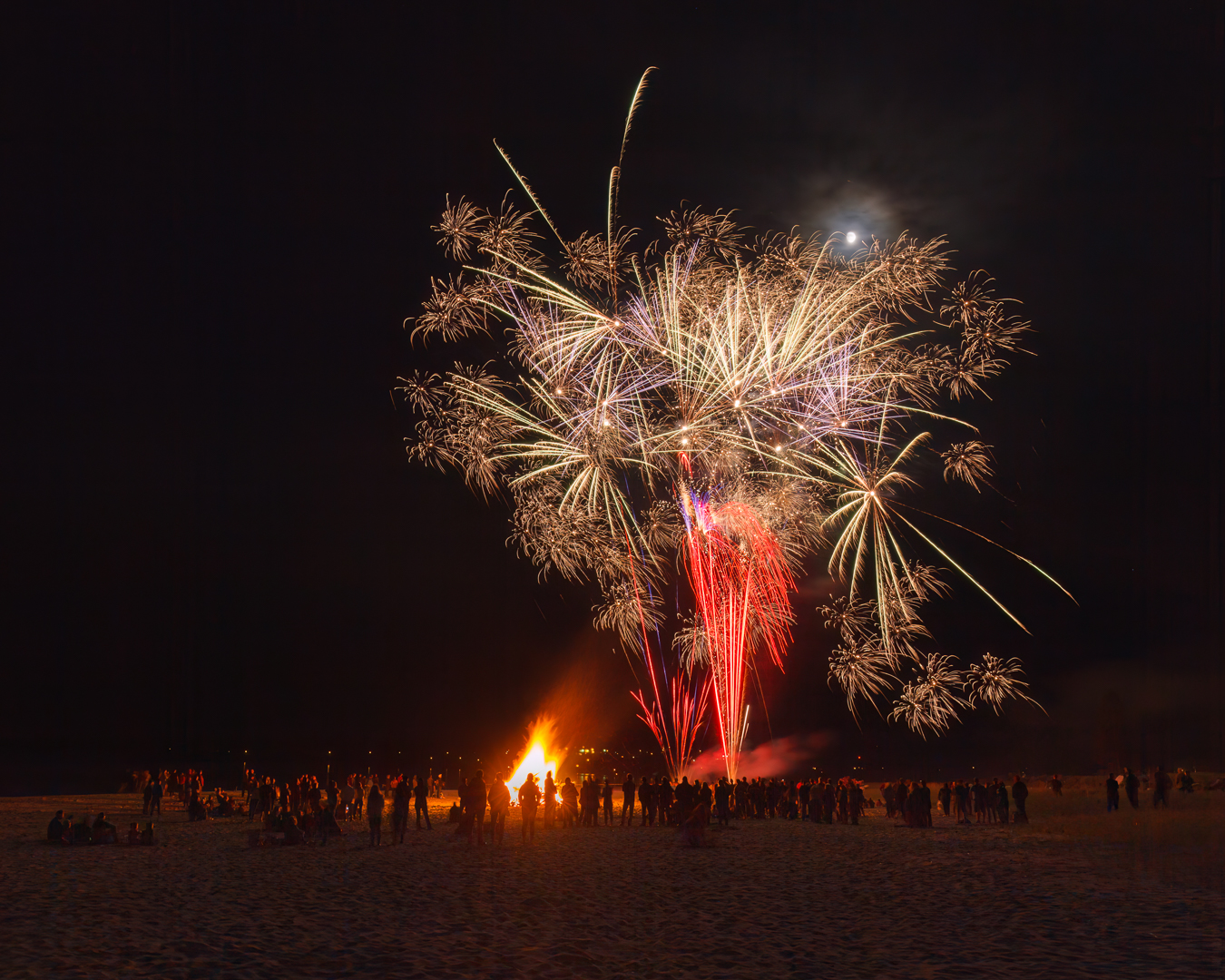
In your Local Area: Below are a number of images that shows an example of how the ambient light can change throughout a fireworks event, you can view the settings for each image while viewing the gallery, just click the ( i ) “image Info” at the bottom right. The ISO settings were 200 for the lighter background images and ISO 100 for the darker background images.
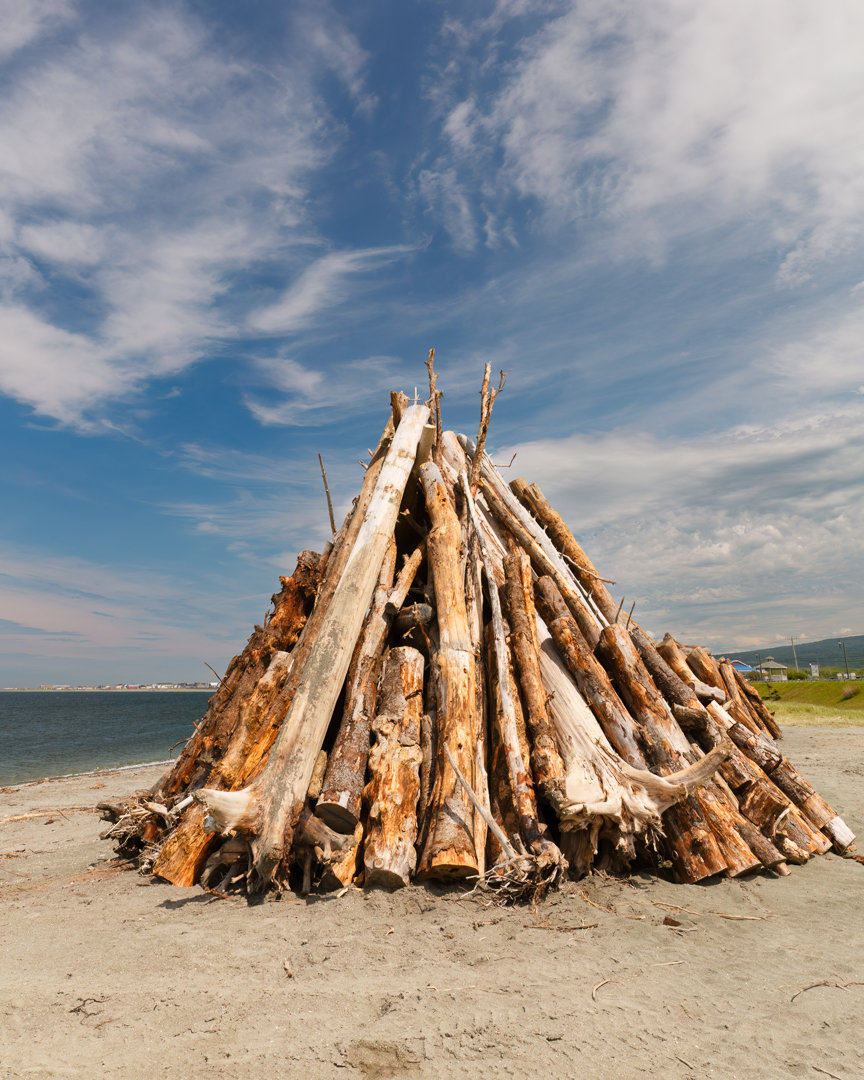
Gaspé Peninsula, Québec Canada: In 2018 during our trip around the Gaspé Peninsula to see the Northern Gannet bird colony on Bonaventure Island in Percé, We unexpectedly got to see a bonfire, the moon, and fireworks at Haldimand Beach near the town of Gaspé celebrating Saint-Jean-Baptiste Day (June 24th). The logs (drift-wood) for these large bonfires come from each respective local shoreline of the Gaspé Peninsula which are gathered by the locals and stacked using tractors with the final result shown in the image below at Cap-Chat Beach, Québec, with this one being approximately 15-20 feet high. The remaining three images were from Haldimand Beach just before the lighting of the bonfire and then during the fireworks. The moon and the bonfire are brighter than ideal, however within a single frame the dynamic range is too high for the camera to capture them with a better exposure, as the main subject is the fireworks we sacrificed the exposure of the bonfire and moon. Consider presenting a series of your photographs to tell the story.
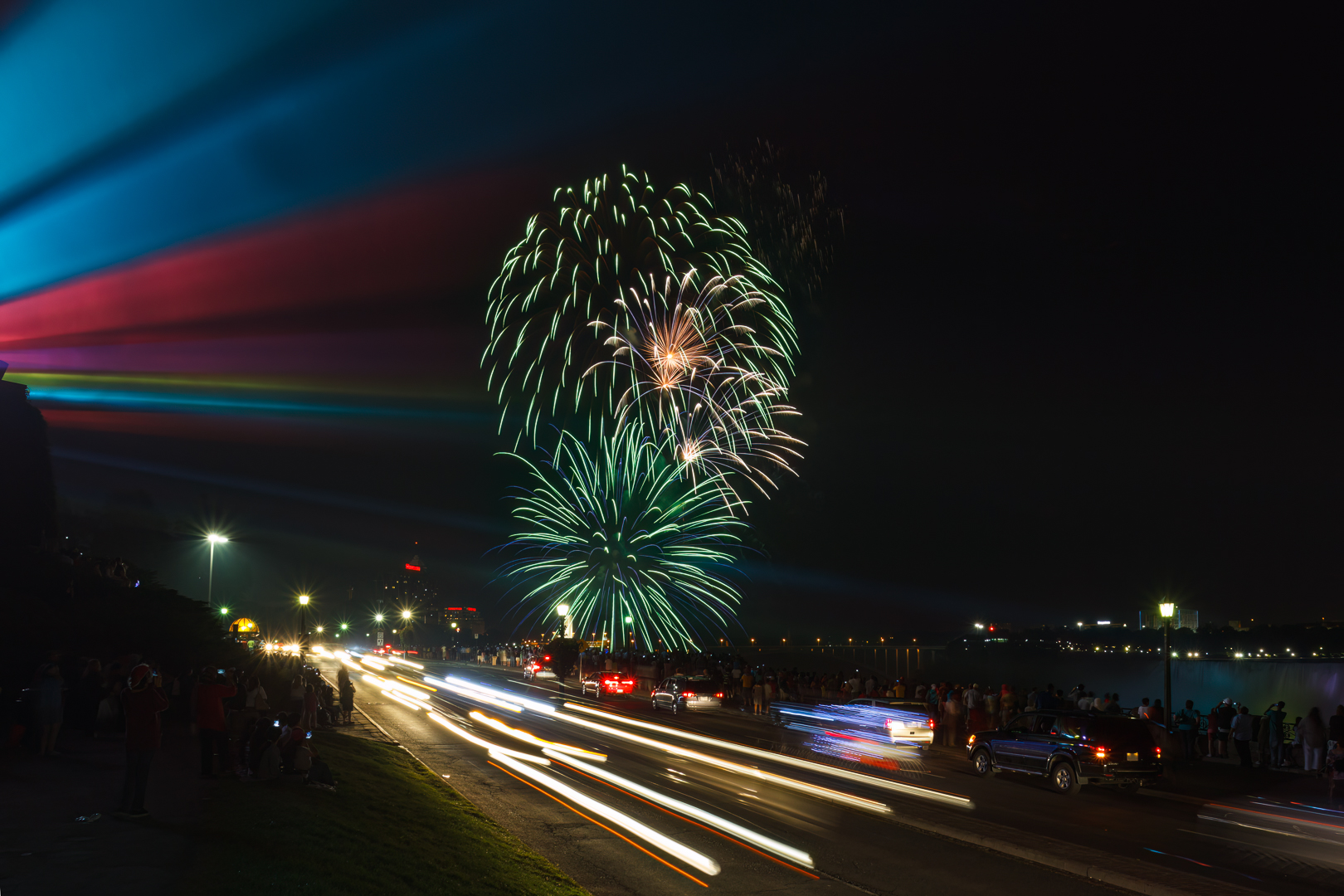
Niagara Falls, Ontario Canada: A number of years ago visiting Niagara Falls Canada we were lucky to experience the fireworks display during our stay. Niagara Tourism present the Summer Fireworks Series, See the Schedule, held daily from late May through early October sponsored by local hotels and the Niagara Parks Commission. This photo shows a fireworks burst, the lights that shine on the Canadian Horseshoe Falls, and the light trails of the vehicles passing by, showing more of the chaos of the busy activity during the fireworks show. Spend time prior to the event to get the best vantage point that works for you, using pre-visualization as a technique to help you decide.
Additional Resources
We try to seek out additional instructional resources for our monthly challenges, we hope you get some worth while tips and hints with the PDF and Youtube video links below:
Links to some free PDF short guides from Photzy.com/blog:
Fireworks YouTube Links
Below are some YouTube video links to help with techniques, hints, and ideas for Fireworks Photography:
■ How to photograph fireworks : 10 Essential tips for beginners: by Photo Genius (14min 5sec)
■ Capture Awesome Firework Photos using an Entry Level DSLR: by RealWorld (17min 9sec)
■ How to photograph Fireworks: by Neil Creek (18min 15sec)
■ Digital Photography 1 on 1: Episode 19: Shooting Fireworks: by Adorama (6min 16sec)
■ How To Photograph Fireworks – Part 1: by Mike Browne (6min 42sec)
■ How To Photograph Fireworks – Part 2: by Mike Browne (11min 54sec)
■ A Different Approach Fireworks Photography: from shooting to editing (step-by-step): by Miklós Mayer (15min 50sec)
You’re encouraged to develop the ability to “tell a story or invoke an emotion“, as well as learn to plan and troubleshoot while creating images.
- It’s important to not only create an image but to also include a “Title”, this process helps with; determining your subject or story, and composition.
- Try writing a short paragraph about; how you came up with the idea, any interesting back ground that compelled you to make the image, and describe any techniques how you overcame any obstacles.
- Do some research and include any relevant information behind the subject of your image. This helps with planning and your approach for a story
An important part of improving your photography is practice, which is one important aspect of the monthly theme challenge, in addition you have an opportunity to learn about different genres, techniques and tips that you may not be familiar with.
Share your images and stories experienced this month
Even though there is no facility to directly upload your image to the this post, you can achieve something similar by commenting on this post; firstly pasting your social media link to your image in the comment, then type any additional message you’d like to share. Everyone who visits will be able to visit your link. Note comments are moderated so it will not show up right away. We do get notifications when any comment is posted, so it won’t take long to get approved and subsequently show up. By pasting your social media link in your comment, it gives everyone visiting the bog a chance to click the link to see your image for the challenge and also the ability to look at your other work by viewing your social media through your pasted link. We want sharing to be a positive experience and we hope you have fun with this month’s dual photo challenge.


 © You Can Learn Photography